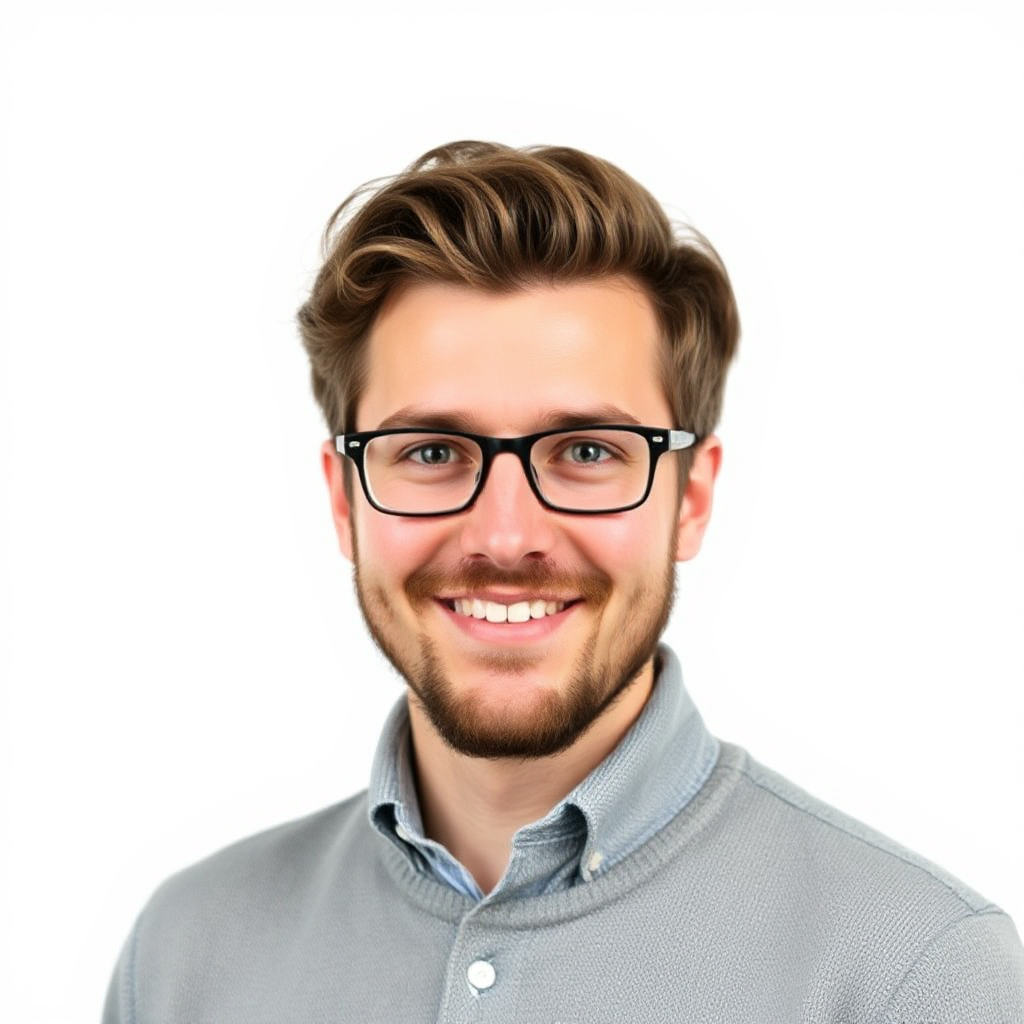
The first things most people recall about Nathan Gill is his imposing stature.
Standing at 193cm, the one-time Reform UK chief in the Welsh region towered over his colleagues and rivals – and he seemed more towering in his favourite cowboy boots.
Beyond that, the quiet-mannered 52-year-old man was a mostly ordinary presence among the more colourful personalities in the political leader's political groups.
A Troubling Heritage
Previously, biographical sketches focused on Gill's idiosyncratic status: the abstinent follower of the Church of Jesus Christ of Latter-day Saints who carried the party's flag in the Senedd, even if critics claimed that he was frequently not present.
Yet his reputation is now a completely altered and troubling one. In the coming weeks he will be sentenced at the central criminal court after admitting guilt to accepting payments to deliver speeches in support of Russia during his tenure as a representative of the EU legislature.
In modern British politics, it is an rare downfall – perhaps with similarities to the case of the former MP, the prominent politician recruited as a spy for Czech intelligence in the early 60s.
The Downfall Begins
The point of Gill's undoing goes back to July 2021 and the arrivals queue at the American capital's Dulles international airport.
American investigators stopped a Ukrainian politician, a Russia-aligned Ukrainian politician close to a Ukrainian oligarch, sometimes known to in his native country as the "dark prince" and a long-term ally and confidant of Vladimir Putin.
It was less than a year before Russia's military offensive of Ukraine and the oligarch had been accused with treason, and his broadcast networks, channels for Russian propaganda, had been taken off the air.
The politician, his representative to the Western nations, was in the sights of American officials.
The FBI retrieved WhatsApp messages from Voloshyn's phone in which he discussed secretly paying Gill. Voloshyn was released after three hours of interrogation, but he and the oligarch were both named the following year by the US as agents of a Kremlin scheme to establish a proxy administration in the country.
The Evidence Mounts
Currently in the Russian capital, Voloshyn was Gill's alleged accomplice, albeit beyond the reach of British authorities. Sixty days later in September 2021, after the stop at the US airport, specialist officers arrested Gill at Manchester airport.
On his mobile device, investigators found communications that showed he had reached an arrangement with Voloshyn. As stated by legal authorities, Gill accepted money on at least eight occasions to deliver particular statements and viewpoints favoring Russia.
The amount has not yet been disclosed, but various amounts totalling in excess of at least ten thousand pounds were mentioned in WhatsApp messages between him and his associate.
In retrospect on them now, the public statements seem subtle, but they offered the mood music in the Western world for a propaganda war being waged by the Kremlin to portray Ukraine's pro-western leaders as authoritarian.
Compensation Scheme
For his cooperation in this secret PR campaign, Gill received "holiday gifts" and "post cards" – coded terms to payment. They were his compensation for making speeches in the EU assembly and giving TV interviews scripted by Voloshyn.
Communicating via email, the Ukrainian denied claims made by the US and UK that he had acted at the direction of Russia's FSB intelligence organization.
He maintained the payments – typically £4,000 or £5,000 each – were simply compensation for interviews, rather than illegal payments. He portrayed Gill as a "humble" parent with five children who was "definitely not rich" and was the "victim" of a "geopolitical conspiracy".
Broader Political Connections
The complex narrative of Gill and Voloshyn raises questions about how Russia has sought to develop contacts across British political life.
Two other MEPs who were part of Farage's Ukip bloc in the EU capital, traveled to the country with Gill on an autumn 2018 trip. During the trip, Coburn, Gill and Arnott were featured on camera in interviews with a television channel, a Russia-friendly broadcaster connected with the oligarch.
About a month and a half later, the three would make similar remarks during a discussion in the European parliament on 11 December that addressed media liberty in the nation and the issue of whether it should be allowed to enter the EU.
The politician addressed the chamber first. While stating he had "every sympathy" with Ukraine, he added: "It is wrong to combat authoritarianism with repression." Prosectors in Britain say he had received a prepared text for the address from Voloshyn on 7 December 2018.
Arnott and Coburn followed, with the former urging the Ukrainian government to guarantee freedom of the press "in the context" of "violence against journalists [and] the proposed closure of broadcasters".
Coburn then accused Ukraine's government of being "deficient" on media liberty, accusing them of "plotting" to close the channel the broadcaster and doubting whether the nation was suitable for European Union accession. The two politicians served on the broadcaster's new "international" council, along the Ukrainian and others.
There is no suggestion that either the other MEPs took bribes in the identical manner as Gill.
Political Responses
Reached by media outlets, Arnott rejected any implication that he had connections to the Russian state or was acting in its interests and referenced another part of his speech in which he said "the best response to a decline in liberty is increased freedom".
He added: "In my view that provides a bit of background and perspective to what I was saying in the remarks and explains where I was coming from. The Russian Federation's restriction of freedom of expression should not be countered by Ukraine likewise restricting freedom of expression."
Attempts have been made to reach Coburn.
In communications with the media, Voloshyn states the television network 112 Ukraine "should have" covered the politicians' transportation expenses on their visit. In reality, declarations by the politicians to the European parliament document their tickets as having been funded by the European Centre for Democracy and Human Rights, a front created by Moscow operatives with the same name as a genuine organization.
The front organization's president, Janusz Niedźwiecki, was arrested in 2021 in his native nation, the Eastern European country, on allegations of espionage for Russia. The former MEP said if he had been aware the money for his trip could have originated from Moscow-linked sources "clearly I would not have taken part in any trip on such a foundation".
Farage's Position
Farage has encountered questions about the degree of interaction he could have had with Voloshyn. Nadia Sass, the journalist, previously posted a photograph on the social media platform of herself with Farage, which seems to have been captured outside the EU building in approximately 2018, stating she would "long for the politician and his group".
A separate tweet featured a picture of the leader holding a T-shirt with the {logo|slog

